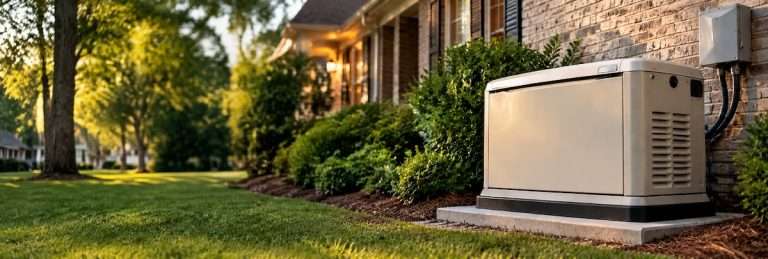
If your standby generator fails to start during a power outage, the problem may involve the battery, fuel supply, controller, safety system, or another component required for automatic operation.
Avoid attempting electrical, fuel-system, battery, or mechanical repairs yourself. If you smell fuel, see smoke or damaged wiring, notice flooding around the generator, or identify another potential hazard, keep away from the equipment and contact the appropriate emergency service or a qualified generator technician.
What Is the Most Common Reason a Standby Generator Won’t Start?
A weak or dead starter battery is one of the most common reasons a standby generator fails to start. However, similar symptoms can result from a battery charger, starter circuit, controller, fuel supply, or other system problem.
A qualified generator technician should inspect and test the system before determining the cause and recommending a repair.
What You Can Safely Observe During the Outage

Without opening the enclosure, touching components, changing settings, clearing alarms, or attempting to start the unit, note:
- The message or alarm code visible on the controller display.
- Whether the engine is silent, clicks, cranks, runs briefly, or stops.
- Whether the home remains without generator power.
- When the whole-home generator last completed an exercise cycle.
- Whether the problem followed a storm, flood, utility outage, or recent service visit.
Photograph the controller display from a safe distance if conditions allow. This information can help a technician understand what happened, but you should not use it to diagnose or repair the generator yourself.
Why a Standby Generator May Not Start During an Outage
Different symptoms can point a technician toward different parts of the generator system. Pay attention to what happens when utility power goes out, and avoid testing or adjusting the equipment yourself.
The Engine Does Not Crank
A weak or dead starter battery is a common reason a standby generator will not crank or start. Similar symptoms can also result from a battery charger, starter circuit, controller, or electrical problem.
Do not open the enclosure or touch, inspect, test, charge, jump-start, or disconnect the battery. Keep away from the generator and contact a qualified technician if you suspect a battery problem.
The Engine Cranks but Will Not Run
If the engine cranks but does not start and continue running, the problem may involve the fuel supply, fuel valve, fuel filter, ignition, airflow, engine controls, or safety systems.
Do not inspect or adjust fuel components, repeatedly attempt to start the generator, or bypass a control or safety device. A technician can test the system and determine why the engine won’t run.
The Generator Runs but the Home Has No Power
If the generator starts but your home remains without power, the problem may involve generator output, electrical connections, or the automatic transfer switch rather than the engine itself.
Do not open electrical panels or transfer equipment. Utility and generator power may both be present, even during an outage.
Do Not Change AUTO Mode or Reset an Alarm Without Manufacturer Guidance
A standby generator may need to remain in AUTO mode to detect a utility outage and begin automatic operation, but settings and reset procedures differ by manufacturer, model, and controller.
If an alarm or warning appears, record the code and consult the owner’s manual or manufacturer instructions before taking any action. Contact a professional.
Avoid repeatedly resetting an alarm. Clearing a warning does not correct the underlying problem and may remove information a technician needs to diagnose the generator.
Why an Exercise Cycle Does Not Guarantee Outage Readiness
A successful exercise cycle can show that the engine started under its programmed test conditions, but it does not necessarily confirm that the standby generator will start correctly, carry household loads, or that the automatic transfer switch will transfer power during an actual outage.
A weekly unloaded exercise cycle may not test the system under the same conditions it will face during an actual power loss. Generac also notes that exercise modes can vary by generator model.
A missed exercise cycle, recurring alarm, or failure during an outage should be evaluated by a qualified generator technician.
New Orleans Conditions Can Affect Generator Readiness
Heavy rain, flooding, humidity, salt air, and wind-driven debris can affect standby generator systems before or during a power outage. Humidity and salt air can accelerate corrosion at battery terminals and electrical connections.
These conditions make consistent generator maintenance particularly important for homeowners in Greater New Orleans.
Keep your generator model number, owner’s manual, alarm information, and maintenance records accessible. Schedule manufacturer-recommended maintenance with a qualified technician rather than attempting electrical, battery, fuel-system, or mechanical work yourself.
When an Outage Failure Requires Generator Repair
Arrange professional diagnosis if your standby generator:
- Fails to start when utility power goes out.
- Displays an alarm or recurring warning.
- Clicks or cranks without starting.
- Starts but does not provide power to the home.
- Trips a breaker. Do not reset the breaker or open an electrical panel.
- Starts and then shuts down unexpectedly.
- Misses its scheduled exercise cycle.
- Shows corrosion, leaks, smoke, physical damage, or flood exposure.
Even if the generator begins operating normally again, an intermittent failure or warning may still need inspection before the next outage.
What to Tell the Generator Technician

From a safe distance, note the generator brand, model if readily visible, and any alarm or warning code displayed on the controller.
Tell the technician what happened when utility power failed, including whether the generator remained silent, clicked, cranked, started briefly, or ran without providing power to the home.
It can also help to mention:
- When the generator was last professionally serviced.
- Whether it recently completed its normal exercise cycle.
- Whether the problem followed a storm, flood, or recent service.
- Whether you noticed any unusual sounds or visible warning lights.
- Whether the generator has experienced similar problems before.
This information can give the technician a better starting point when inspecting the system.
Standby Generator Repair in Greater New Orleans
Lightning Service Inc is a family-owned and operated company that has served Metairie and Greater New Orleans since 1978.
If your standby generator fails to start, displays an alarm, shuts down unexpectedly, or does not provide power during an outage, our technicians can inspect the system, diagnose the problem, and explain the available repair options.
Lightning Service Inc services whole-home generator systems throughout Metairie, New Orleans, Jefferson Parish, and surrounding communities. Service availability and repair options depend on the generator’s brand, model, condition, location, parts availability, and other site-specific factors.
Contact Lightning Service Inc or call (504) 837-3278 to schedule generator service.
If you want it to last, call 837-FAST.