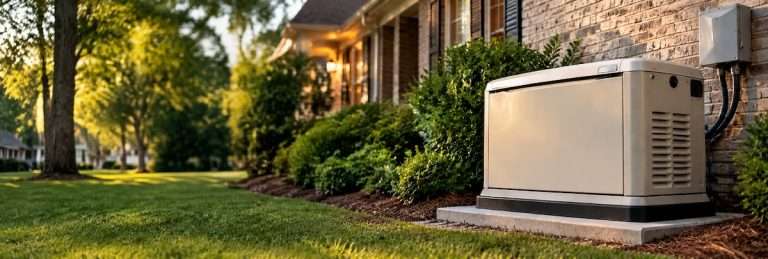
The right whole-home generator size depends on what you need to power during an outage, including central air conditioning, refrigeration, lighting, medical equipment, and other major electrical loads.
A professional load calculation helps New Orleans homeowners choose a standby generator with reliable coverage without oversizing or undersizing the system.
Whole-home generator sizing also depends on which loads may start together, the generator’s fuel source, and installation factors such as placement, permitting, exhaust clearance, flood exposure, and fuel connections.
What Determines the Right Whole-Home Generator Size?

The main decision is whether you need backup power for essential circuits or broader whole-home coverage, including central AC. Square footage alone is not a sizing method because homes of the same size can have very different electrical equipment and usage patterns.
Capacity must account for normal running watts, the starting watts required by motor-driven equipment, and the loads expected to operate simultaneously. The main electrical panel also needs review to determine how those loads can transfer safely.
Choose Between Essential-Power and Whole-Home Coverage
Essential-load coverage supplies selected circuits, often refrigeration, lighting, internet equipment, medical devices, a sump pump, and possibly one HVAC system. This reduces demand by excluding lower-priority appliances.
Whole-home coverage supports a wider range of household demand, potentially including central AC, kitchen equipment, and more rooms. It does not mean every appliance can operate at once. Generator capacity and load-management settings still set the limits.
Identify the Biggest Electrical Loads in Your Home
Central AC is often the biggest sizing factor in New Orleans because the AC compressor draws substantial power, especially at startup. Electric heat, water heaters, ranges, dryers, pool pumps, well pumps, EV chargers, and workshop equipment can also increase the capacity required.
Can a Whole-Home Generator Run My Central AC?

Yes, a properly sized whole-home generator can run central AC. Reliable operation depends on the cooling system, the AC compressor’s startup demand, the number of HVAC systems, and the other loads that need power.
One AC system has a very different load profile from two outdoor units or multiple HVAC zones. Technicians review AC equipment information, the electrical panel, priority appliances, and the desired level of coverage.
Why AC Has Such a Big Impact on Generator Size
Startup load is the short surge of electricity a motor needs when it begins running. A generator may seem sufficient based on operating watts but struggle if the compressor and another large appliance start at nearly the same time.
A compatible soft starter can reduce compressor startup demand on some AC systems. It is a design option, not a substitute for a complete load calculation, and it does not guarantee that a smaller generator can support every requested load.
Do not rely on the largest advertised kilowatt rating alone. Generator output can differ by fuel, while real performance depends on startup demand, ambient conditions, and simultaneous use.
What We Check Before Sizing a Generator for AC
A home running one central AC system, refrigeration, lighting, internet service, and medical equipment may need less capacity than one operating two AC systems, electric cooking, a dryer, and a pool pump. Equipment specifications and an electrical review determine the right unit.
A design assessment for whole-home generator installation connects your comfort priorities to measurable electrical demand.
Load-management controls can temporarily delay selected high-demand appliances when AC starts. They make household operation more practical, but the generator must still support the loads allowed to run together.
Common Whole-Home Generator Size Ranges

Residential standby generators are available across broad capacity ranges. These examples provide planning context, not a final recommendation:
- Essential-power coverage, often about 10 to 14 kW: May support refrigeration, lighting, communications, selected receptacles, and certain mechanical equipment, depending on measured demand.
- Selected whole-home coverage, often about 18 to 26 kW: May support one central AC system and a wider group of household circuits when load priorities are controlled.
- Larger whole-home coverage, often 30 to 48 kW or more: May be considered for multiple HVAC systems, extensive electric appliances, pumps, workshops, or greater simultaneous use.
Central AC, electric water heating, pool equipment, EV charging, and multiple HVAC systems can change the demand substantially. The final rating must also match the fuel installed at the property.
Fuel Type and Generator Output
Natural gas and propane affect generator output, operating cost, site requirements, and runtime. Because some generators have different ratings for each fuel, the fuel-specific output must guide the final calculation. Natural-gas supply must also support the generator and other connected appliances, while propane runtime depends on tank capacity, generator load, weather, and the manufacturer’s documented consumption rate.
Automatic transfer switch: This equipment disconnects the home from utility power and transfers approved loads to generator power, preventing unsafe backfeeding. A whole-home transfer switch can make the main panel eligible for backup power, while a selected-circuit arrangement supplies designated circuits and can reduce required capacity.
Load management: Controls can delay or shed lower-priority, high-demand equipment so the generator supports realistic household priorities. They help manage simultaneous demand but cannot increase the unit’s fuel-specific output.
Why a Professional Load Calculation Matters
A professional load calculation matches generator capacity to the equipment and comfort level you want during an outage. It turns a goal such as keeping the house cool into defined HVAC, appliance, electrical, and fuel requirements.
What a Generator Sizing Assessment Reviews
The assessment records priority appliances, central AC and other motor loads, panel configuration, operating voltage, transfer-switch capacity, available fuel, and simultaneous-use expectations. It should also account for planned additions such as an EV charger, second HVAC system, pool equipment, or electric water heater.
Avoiding an Oversized or Undersized Generator
An undersized generator may overload, shed important circuits, or fail to support key equipment during peak demand. An oversized unit can raise purchase, installation, and fuel costs without meaningfully improving outage comfort.
Before an assessment, decide:
- Which appliances, rooms, medical devices, and comfort systems must remain powered?
- Will you need one AC system or multiple HVAC zones, and must work-from-home equipment stay online?
- Is natural gas available with adequate supply, or is propane storage practical?
- Could planned appliances, an EV charger, or other upgrades change electrical demand?
Lightning Service Inc has served Metairie and Greater New Orleans homeowners since 1978, with evaluations that account for Louisiana heat, hurricane outages, permitting, fuel infrastructure, and residential electrical conditions.
Get a Generator Sizing Estimate
The right generator size depends on the equipment you want to run, your electrical setup, and your available fuel source. An on-site assessment is more useful than sizing from square footage or a single appliance count.
Lightning Service Inc can assess your home and recommend a standby generator. Schedule a generator installation estimate or call (504) 837-3278.